
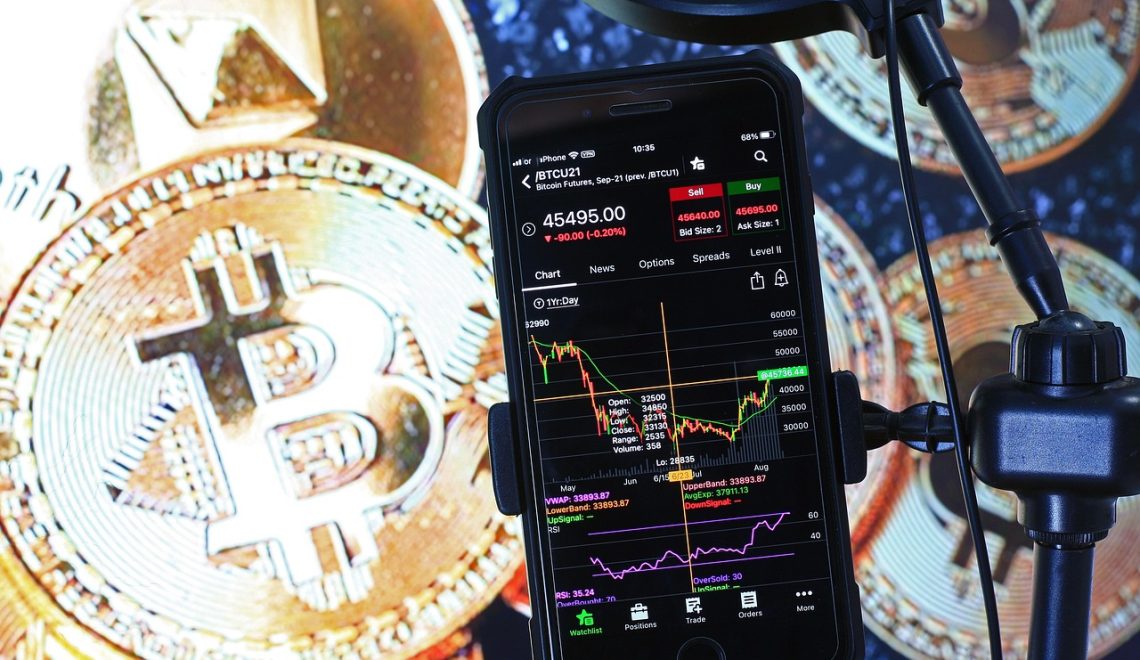
Riley Mitchel reported on Friday, February 13, 2026 at 03:50 PM that the analysis of cryptocurrency technical charts reveals distinct risk profiles and cost implications associated with different trading strategies.
Cryptocurrency technical charts are essential tools for evaluating the performance characteristics of various digital assets, allowing traders to identify trends and make informed decisions. When assessing these charts, criteria such as price movements, volume patterns, and historical volatility play a critical role in differentiating between alternatives. By presenting options side-by-side, these charts can reveal cost-related differences that significantly impact trading choices, ultimately clarifying which cryptocurrencies may offer more favorable investment opportunities.
How the Options Differ
- Cryptocurrency technical charts provide visual representations that facilitate the comparison of price trends and patterns among different digital currencies.
- Some charting tools focus on user-friendliness, offering intuitive interfaces that simplify navigation, while others are designed for advanced users, featuring complex functionalities.
- Security features can vary significantly between charting platforms, with some offering enhanced encryption and account protection measures compared to others that may lack robust safeguards.
- The availability of analytical indicators may differ; some platforms provide a wide range of metrics for in-depth analysis, while others prioritize essential, easy-to-read data.
- The suitability of various options often hinges on individual experience level, as novice traders may benefit from simplified charts, whereas experienced users might prefer comprehensive, data-rich environments.
Comparing Types of Technical Charts for Investors
In the landscape of cryptocurrency investment strategies, the evaluation of different technical charts is vital for informed decision-making. Technical charts serve as essential tools that investors utilize to analyze price movements, trends, and market behaviors over time. This article delves into the comparative evaluation of various types of technical charts commonly used in the cryptocurrency space, focusing on key criteria for assessment such as usability, risk factors, and cost implications. Distinct risk profiles associated with various trading strategies.
When examining the available options, three primary types of technical charts stand out: line charts, candlestick charts, and bar charts. Each of these chart types presents unique advantages and disadvantages that can significantly impact an investor’s approach. Key criteria for assessing different types of charts.
Line charts offer a simplified view of price movements over time, depicting only the closing prices. Their key strength lies in their straightforward visual representation, which is beneficial for beginner investors who may prefer an uncomplicated overview. However, line charts fail to capture intraday price fluctuations, potentially obscuring significant volatility information that may influence trading decisions.
Evaluating Chart Types for Cryptocurrency Trading
How usability impacts investor decisionmaking?
In contrast, candlestick charts provide a more nuanced perspective by displaying opening, closing, high, and low prices for specific time intervals. This format allows investors to detect patterns such as bullish or bearish trends, making them a popular choice for technical analysis. The increased complexity of candlestick charts, while advantageous for experienced traders, may present a learning curve for novices, impacting their usability. Understanding the cost implications of chart choices.
| Stability fault lines | Recovery difficulty | Experience-dependent users | Adjacent asset classes |
|---|---|---|---|
| High volatility in market trends can distort signals. | Significant price drops may be hard to recover from without knowledge. | Novice users may misinterpret chart signals. | Forex markets may offer more stability. |
| Delays in data can lead to outdated insights. | Emotional reactions to market dips can impede recovery. | Users lacking technical background may struggle. | Commodities can provide more predictable patterns. |
| Inaccurate data sources can skew analysis. | Quick recovery might be difficult without prior experience. | Inexperienced traders may not manage risk effectively. | Equity indexes might simplify decision-making. |
| Chart interpretation can vary widely among platforms. | Sudden changes may lead to missed recovery opportunities. | Casual investors may overlook key indicators. | Binary options could represent simpler strategies. |
Bar charts present another layer of complexity similar to candlestick charts, illustrating price dynamics through vertical bars that represent the same opening and closing information. However, their structure may be less intuitive than that of candlestick charts, which could limit their appeal for initial users. The comparison of usability among these chart types indicates that while line charts are best for simplicity, candlestick charts generally offer deeper insight when analyzed correctly, making them more suited for intermediate to advanced traders. Security considerations in the evaluation of technical charts.
Risk assessment is another crucial factor in distinguishing between technical chart types. Line charts, while less informative, may offer fewer distractions to novice traders, reducing the potential for misinterpretation. Conversely, the complexity of candlestick and bar charts carries a higher risk of misreading patterns, particularly for inexperienced users.
Comparing Chart Types for Effective Cryptocurrency Analysis
Exploring how different chart types fit various investment profiles.
Cryptocurrency technical charts are not well-suited for users seeking to understand long-term fundamental trends or the inherent value of various digital assets, as they primarily focus on price movements and patterns rather than underlying characteristics. For individuals who require in-depth analysis of market sentiment, macroeconomic factors, or regulatory impacts, relying solely on these charts may lead to incomplete assessments and misguided investment decisions. Additionally, those who lack experience in interpreting complex chart signals could encounter difficulties, resulting in potential misjudgments about market conditions. In such cases, alternative analytical approaches or tools may be more beneficial for informed decision-making.
Cost-related differences also affect investment strategies linked to the use of cryptocurrency technical charts. While many platforms offer basic line charts for free, more sophisticated options like candlestick and bar charts typically require subscriptions to advanced trading services or platforms. These costs can vary significantly based on the features provided, such as live updates or analytical tools.
| Upfront investment exposure | Uncertainty tolerance required | Skill dependency level | Contextual suitability limits |
|---|---|---|---|
| Subscription fees for advanced charting tools can add up. | Investors with low tolerance may hesitate to act. | Basic chart reading can be learned quickly. | Cryptocurrency markets can be unpredictable. |
| Additional costs for historical data may apply. | Risk-averse traders may avoid advanced strategies. | Proficiency in technical analysis requires time. | Derivatives entail a different risk profile. |
| Free tools may lack essential features for serious analysis. | High uncertainty can deter new investors. | Complex indicators require advanced skills. | Only active traders may find value in real-time charts. |
| Simulated trading platforms can incur licensing fees. | Decision-making under uncertainty can hinder action. | Advanced tools often have steep learning curves. | Regulatory changes can impact asset availability. |
To critically evaluate alternatives, specific criteria must be established. Usability, as discussed earlier, incorporates the learning curve associated with each chart type. Risk assessments focus on the interpretation of data and the associated decision-making processes.
Summarizing the comparative assessment reveals that while line charts cater primarily to new investors prioritizing simplicity, candlestick charts and bar charts offer deeper analytical capabilities that can enhance decision-making for more experienced traders. However, the usability issues and risk factors associated with the latter two should not be underestimated.
In conclusion, choosing the appropriate cryptocurrency technical chart requires a nuanced understanding of each option’s strengths, weaknesses, and suitability based on the investor’s experience level and financial goals. Evaluating these factors helps investors make informed choices that align with their overall trading strategies. Ultimately, understanding the differences among these technical charts can provide a clearer direction for investment decisions, making this comparative analysis a valuable resource for navigating the intricacies of cryptocurrency markets.
How Options Compare
What are cryptocurrency technical charts and how do they work?
Cryptocurrency technical charts are graphical representations that display the historical price movements and trading volumes of cryptocurrencies. They utilize various indicators and patterns to help traders identify potential future price movements based on past market behavior. However, this introduces tradeoffs that must be evaluated based on cost, complexity, or network conditions.
How can one effectively use these charts for trading decisions?
Traders often use technical charts to spot trends and potential entry or exit points. However, it is crucial to note that while these charts can indicate probable price movements, they do not guarantee future results, and reliance solely on them can lead to significant risks.
What are some limitations of relying on technical charts in cryptocurrency trading?
One limitation is that technical charts may not account for sudden market events or news that can significantly impact prices. Additionally, the effectiveness of these charts can be influenced by market volatility, where rapid price changes can lead to misleading signals. However, this introduces tradeoffs that must be evaluated based on cost, complexity, or network conditions.


